We earn a commission if you buy through links on this page, at no extra cost to you.
For most indoor infrared saunas, Canadian hemlock is the best all-round wood: it’s pale, stable, nearly odorless and keeps the price down, which is why most of the cabins we cover use it. Choose cedar if you want the classic sauna scent and are willing to pay more, or need a wood that stands up to weather outdoors. Choose basswood or aspen if strong wood smells bother you. Here’s how the common sauna woods compare, and a cabin in each.
A cabin in each wood
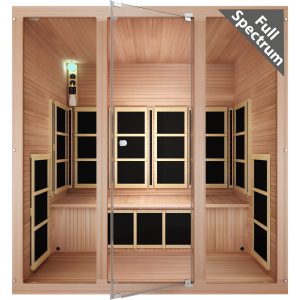
- Hemlock: JNH Joyous+ 2-Person. FSC-certified Canadian Hemlock, untreated and unstained inside, per JNH.
- Cedar: Dynamic Saunas Elite 1-Person. Pacific clear cedar, 35 x 28 x 65 inches, up to 140°F.
- Spruce: Albott 1 Person. Finnish spruce, 27.2 x 31.8 x 60.2 inches, about 6 square feet.
How we compared: we haven’t built or tested these saunas ourselves. The wood descriptions below are general and widely known; the product details are each seller’s claims, from the Amazon listing or the maker’s own spec page. How we review.
Last updated 15 October 2026. Specs and availability from each Amazon listing, checked that day.
Sauna woods compared
| Wood | Look and scent | Where you’ll see it |
|---|---|---|
| Canadian hemlock | Pale, even grain, almost no scent | Most indoor infrared cabins |
| Western red cedar | Reddish, strong scent | Premium, outdoor and barrel saunas |
| Basswood | Very pale, odorless | Some premium cabins |
| Aspen | Pale, little scent | Some cabins and benches |
| Spruce | Pale, some knots | Finnish saunas, budget cabins |
| Pine | Pale to yellow, resin pockets | Budget cabins |
General characteristics of each wood. Grades vary: clear (knot-free) boards look and behave better than knotty ones in any species.
Does the wood matter in an infrared sauna?
Less than in a traditional sauna, but it still matters. A traditional sauna heats the air and the walls to well above 150°F, so the wood has to handle that heat and you feel it on your skin. In an infrared cabin the panels warm your body directly and the air stays cooler, usually 120°F to 140°F, so the walls never get as hot. That means the wood’s job is mainly structure, insulation, scent and looks, and the wood choice won’t change how well the sauna heats you. The heaters, the cabin’s insulation and how well the door seals do that.
The common sauna woods
Canadian hemlock: the default
Hemlock is the wood in most infrared cabins sold online, including JNH’s Joyous models, most Dynamic cabins, Homsido and several Albott models. It’s light in color with a straight, even grain, it’s stable under heat so it resists warping and splitting, it has almost no smell, and it costs less than cedar. The downside is mostly aesthetic: it lacks cedar’s color and scent. JNH says the Canadian Hemlock in its Joyous+ comes from FSC-certified forests, uses no plywood, and is left untreated and unstained.
Western red cedar: scent and weather resistance
Cedar is the traditional premium sauna wood. It has a strong, pleasant smell that many people associate with saunas, a rich color, and natural oils that help it resist rot and insects, which is why it’s the usual choice for outdoor saunas and barrel saunas. It costs more than hemlock, and its scent is strong: if you’re sensitive to strong smells, sit in a cedar sauna before you buy one. See also how to choose a cedar infrared sauna kit.
Basswood and aspen: for sensitive noses
Basswood is very pale and close to odorless, and some brands sell it as the choice for people with allergies or chemical sensitivities. Aspen is similar: light, smooth and low in scent; JNH sells a Joyous+ Mini 1-person model in aspen on its own store. Both are less common on Amazon than hemlock or cedar.
Spruce and pine: budget and traditional
Nordic spruce is a classic wood for traditional Finnish saunas and turns up in budget infrared cabins too, like the Albott 1 Person. Pine is cheaper still. Both can have knots and resin pockets, and resin can soften and bead in high heat; that’s more of an issue in a hot traditional sauna than an infrared one. Look for clear, knot-free boards on the bench and backrest, where your skin touches the wood.
A note on “Japanese cedar”
Some listings advertise Japanese cedar. That’s sugi, which, despite the name, isn’t a true cedar or the same wood as Western red cedar, so don’t expect the same scent or weather resistance. Judge it on the listing’s details.
What to check besides the wood
- Untreated interior: the inside should be bare wood, with no varnish, paint or stain that could give off fumes when it warms up. JNH, for example, says its Joyous+ wood is untreated and unstained.
- Solid wood, not plywood: solid tongue-and-groove boards hold up better than plywood or veneer panels.
- Glue: JNH says it uses a nonchemical, furniture-grade glue between the slats so it won’t off-gas. It’s a fair question to ask any seller.
- Wall thickness and insulation: dual-wall construction holds heat better and lets the cabin warm up faster.
- Bench comfort: smooth, knot-free bench boards matter more than the species of the walls. A backrest helps on long sessions.
Our picks in each wood
Hemlock: JNH Lifestyles Joyous+ 2-Person
FSC-certified Canadian Hemlock, untreated and unstained per JNH, with 8 carbon heaters, up to 170°F, and a 47.3 x 39.5 x 75 inch footprint. Compare it with the original in our Joyous vs Joyous+ guide.

Cedar: Dynamic Saunas Elite 1-Person
Pacific clear cedar with a tempered glass door, 35 x 28 x 65 inches, 4 carbon panels, 118°F to 132°F recommended and 140°F maximum, with Bluetooth and a 5-year limited warranty, per its listing.

Spruce: Albott 1 Person
Finnish spruce, 27.2 x 31.8 x 60.2 inches and 107 pounds, with 4 carbon panels, a heated foot area and a roof vent. Albott says one person can set it up in about 20 minutes with basic tools, and it runs on 110V.

Hemlock on a budget: Albott 1 Person with 7-color light
A larger Albott in Canadian hemlock, 32.3 x 32.3 x 66.1 inches with 7 carbon panels, a foot heater, Bluetooth speakers and a reading light. Albott says it installs without tools in under an hour.

For more cabins by size, see the best home infrared saunas, the best 2 person infrared saunas and the best 1 person infrared saunas.
Frequently asked questions
What is the best wood for an infrared sauna?
For most indoor infrared saunas, Canadian hemlock: it’s stable, nearly odorless and costs less than cedar. Cedar is the pick if you want the scent or need outdoor weather resistance, and basswood or aspen if strong smells bother you.
Is cedar or hemlock better for an infrared sauna?
Hemlock suits most indoor cabins and keeps the price down. Cedar costs more, smells strongly and resists rot, which makes it the better choice outdoors. In an infrared sauna the wood doesn’t change how well it heats you.
Is a cedar sauna bad if you have allergies?
Cedar has a strong natural scent that some people find irritating. If you’re sensitive to strong smells, try a cedar sauna before buying, or choose a low-scent wood such as hemlock, basswood or aspen.
Should the inside of a sauna be sealed or stained?
No. The inside walls and benches should be bare wood. Finishes can give off fumes when they warm up. JNH, for example, says its Joyous+ wood is untreated and unstained.
Is Japanese cedar the same as red cedar?
No. Japanese cedar, or sugi, isn’t a true cedar and isn’t the same wood as Western red cedar, so it won’t have the same scent or weather resistance.
Sources: the Amazon listings for the saunas named, checked 15 October 2026; JNH Lifestyles’ Joyous+ 2-Person specification page and Joyous collection page.