We earn a commission if you buy through links on this page, at no extra cost to you.
A portable sauna (a fabric tent or an infrared blanket) costs a few hundred dollars, packs away after each session and needs no room of its own. A home sauna cabin is a wooden room with heaters in the walls: it costs a lot more and takes a permanent spot, but you sit fully inside it, it feels like a real sauna, and two people can share it. Choose portable if space or budget is tight, or you rent. Choose a cabin if you have the floor space and want a sauna you’ll use for years.
Our picks by type
- Portable tent: SereneLife Infrared Sauna Tent. 35 x 71 inches, tall enough to sit fully inside, 3 carbon panels, up to 140°F.
- Sauna blanket: Lifepro RejuvaWrap. 9 heat levels from 95°F to 176°F, a 5 to 60 minute timer and auto shut-off.
- Cabin for one: Dynamic Saunas Elite 1-Person. Pacific cedar, 35 x 28 x 65 inches, up to 140°F.
- Cabin for two: JNH Lifestyles Joyous 2 Person. 7 carbon heaters, up to 140°F, on a standard household outlet.
How we compared: we haven’t tested these saunas hands-on. We compared the current Amazon listings for the tents, blankets and cabins in our buying guides on size, heat, setup and power. Every product spec is the seller’s own claim. How we review.
Last updated 15 October 2026. Specs and availability from each Amazon listing, checked that day.
Portable sauna vs home cabin at a glance
| Portable sauna | Home sauna cabin | |
|---|---|---|
| What it is | Fabric tent or zip-up blanket with carbon heaters | Wooden cabin with carbon heaters in the walls |
| Floor space | None when packed away | About 27 x 32 in (1 person) to 47 x 40 in (2 people) |
| Setup | Minutes, every session | About 20 minutes to an hour, once |
| Max heat (listed) | About 140°F for tents | 140°F, up to 170°F on some |
| Seats | One (a few tents take two) | One to four |
| Power | Standard outlet | Standard 15 amp outlet for small cabins; bigger ones may need 20 amp |
| Cost | A few hundred dollars | High hundreds to a few thousand dollars |
Figures from the Amazon listings of the tents, blankets and cabins in our guides: Durherm, TaTalife, SereneLife and Smartmak tents; the Lifepro blanket; Albott 1 Person, Dynamic Elite 1-Person and JNH Joyous cabins.
What counts as a portable sauna?
- Head-out tent: a small fabric box you sit in on a folding chair, with your head out through a hole in the top. The TaTalife is 27.6 x 31.5 x 37.8 inches set up and lists 115°F to 140°F. See our portable infrared sauna guide.
- Full-size tent: a taller tent you sit fully inside. The SereneLife is 35 x 71 inches with a 140°F maximum, and the Smartmak, at 47 x 35 x 63 inches, is sold for one or two people.
- Sauna blanket: a zip-up wrap you lie in on a bed or mat. The Lifepro is 71 x 36 inches with settings from 95°F to 176°F. See our infrared sauna blanket guide.
All three plug into a household outlet and pack away after use. They’re all infrared, so check the listing says infrared and not “steamer”: steam tents look the same in photos but pipe in hot steam from a kettle-style unit.
What is a home sauna cabin?
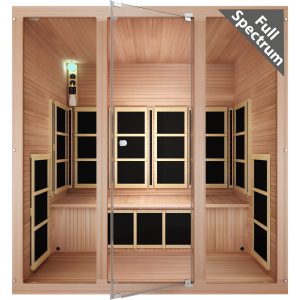
A pre-built cabin is a small wooden room, usually hemlock or cedar, with carbon infrared panels in the walls, a glass door, a bench and a control panel. It arrives flat-packed and the panels clip or slot together. The smallest one-person cabins take about 27 x 32 inches of floor; two-person cabins like the JNH Joyous take 47.3 x 39.5 inches and stand 75 inches tall. Our home infrared sauna guide compares cabins from one to four people.
The differences that matter
The session itself
In a head-out tent or a blanket, your head stays in room air. Some people like that because it never feels stuffy; others find it isn’t really a sauna. In a cabin you sit fully inside a warm wooden room, lean back against the wall, and can read or talk to someone next to you. If you want the feel of a sauna, a cabin is closer to it.
Heat
The tents in our guide list a maximum of about 140°F, and most cabins list 135°F to 140°F, so the top setting is similar. Cabins built for higher heat go further: the JNH Joyous+ lists up to 170°F. Blankets list a setting range rather than an air temperature, because there’s no air space to heat: the Lifepro’s runs from 95°F to 176°F.
Space
This decides it for many people. A blanket goes in a drawer and a tent folds flat into a closet. A cabin needs a permanent spot with room to open the door, a few inches around it for air, and a ceiling taller than the cabin, which is about 60 to 75 inches for the models we cover. Measure before you shop.
Setup and moving
A tent pops open or goes up on a frame in minutes, but you do it every time. A cabin is built once: Albott says about 20 minutes for its compact one-person model, and Dynamic says about an hour for its cabins. The JNH two-person cabins weigh 250 to 303 pounds in pieces, so plan on two people. If you rent or move often, portable wins; most cabins can be taken apart again, but it’s a job.
Power
Tents and blankets plug into any standard outlet. Most one and two person cabins do too: JNH says its 1 and 2 person saunas run on a standard 15 amp household outlet. Bigger cabins can need more: the Dynamic Madrid 3 person uses a 20 amp plug, so read the listing before you buy.
Sharing
Most portable saunas are for one person; the Smartmak in our tent guide is sold for one or two. If two of you will use it together, a two-person cabin is the comfortable choice.
Cost
Tents and blankets sell for a few hundred dollars. Cabins start in the high hundreds of dollars for a compact one-person model and run to a few thousand for two people. Prices move often, so check each listing on the day you buy.
Cleaning and wear
You’ll sweat in either. A tent or blanket needs wiping inside after each session, and a towel or liner helps; its fabric, zips and folding frame take wear from being packed away. In a cabin, sit on a towel and wipe the bench; the wood itself needs very little.
Which should you buy?
Buy a portable sauna if
- you rent, move often, or can’t give up floor space
- you want to try infrared sessions before spending more
- you’ll use it alone
- you don’t mind setting it up and packing it away each time

Prefer to lie down? The Lifepro RejuvaWrap blanket folds into a drawer. Want your head outside the heat? See the head-out tents in our portable infrared sauna guide.
Buy a home sauna cabin if
- you have a spare room, basement or home gym with space for it
- you want the feel of a real sauna, sitting fully inside
- two people will use it, together or in turns
- you’ll use it several times a week for years


Short on space? The Albott 1 Person takes about 27 x 32 inches. Want more heat for two? The JNH Joyous+ 2-Person reaches up to 170°F; see our Joyous vs Joyous+ comparison.
Safety, whichever you choose
Start with short sessions on a low setting, drink water before and after, and stop if you feel dizzy or unwell. Don’t fall asleep in a tent or blanket. If you’re pregnant, have a heart condition or take medication that affects how you handle heat, ask your doctor first. Read our guide to using a sauna safely, and if you’re thinking of a cabin outside, see outdoor vs indoor infrared saunas.
Frequently asked questions
Is a portable sauna as good as a home sauna cabin?
It will warm you up and make you sweat, and the tents in our guides list a maximum of about 140°F, similar to many cabins. The difference is the experience: in a head-out tent or blanket your head stays outside, while in a cabin you sit fully inside a wooden room and can share it.
How much space does a home sauna cabin need?
From about 27 x 32 inches for a compact one-person cabin like the Albott to 47.3 x 39.5 inches for a two-person cabin like the JNH Joyous, per their Amazon listings. Leave room for the door to open and a few inches around it for air.
Can I use a portable sauna in an apartment?
Usually, yes. Tents and blankets plug into a standard outlet and pack away after use. Put a towel or mat under the chair, and check your lease if you’re unsure.
Do home sauna cabins need an electrician?
Most one and two person cabins don’t. JNH says its 1 and 2 person saunas run on a standard 15 amp household outlet. Larger cabins can need a 20 amp or dedicated circuit, so check the listing.
Can I move a home sauna cabin?
Yes, but it’s a job. Most cabins are built from panels that clip or slot together, so they can be taken apart again. The JNH Joyous two-person cabin weighs 250 pounds, so plan on two people.
Sources: the Amazon listings for each product named, checked 15 October 2026 (tent, blanket and cabin specs as used in our buying guides, checked 14 October 2026), and JNH Lifestyles’ answer on power for its 1 and 2 person saunas.